
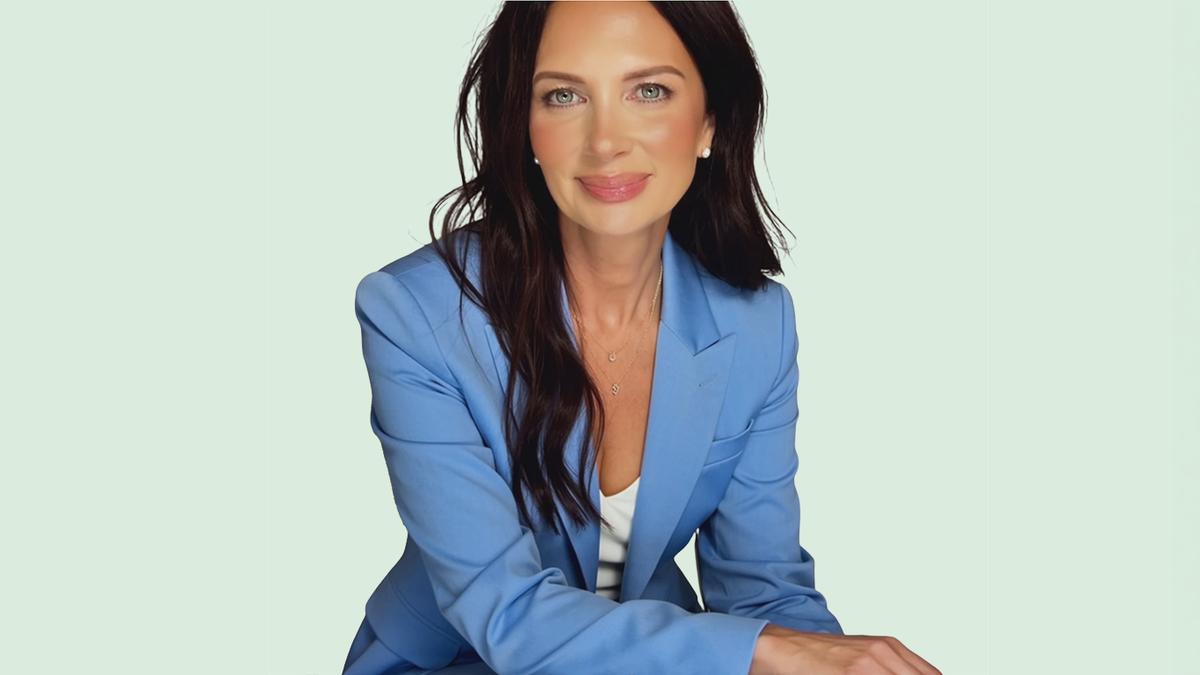
In Her Words: Stephanie Weeks
Name: Stephanie Weeks
Age: 47
Location: United States
Current Health Status: Healthy and thriving — just celebrated 5 years clear.
__
Please provide a brief introduction about yourself [background, family, work interests, hobbies, etc.]
I’m Stephanie — a wife, a mom, a dog mom, and someone who has always been obsessed with learning about health. For over 25 years, I’ve loved studying biology, epigenetics, nutrition, cancer research, neuroscience, and the “why” behind how the body heals.
Before cancer, I built a very successful career in mortgages. After my healing journey, I walked away from that career because it no longer aligned — and now I use my platforms to share what helped me, in a way that’s grounded, hopeful, and human.
When were you diagnosed with cancer and at what age? [Feel free to share as much about the diagnosis as you feel comfortable, including stage, how the cancer was found, family history, etc.]
I was diagnosed at 42 years old with stage 3, triple negative, rare, aggressive, invasive, lymph-involved breast cancer.
My husband is actually the one who found a lump and brought it to my attention. I’m grateful I listened immediately and got it checked right away.
There’s also family history — my mom had breast cancer about 10 years before my diagnosis, and she’s now approaching 20 years cancer-free.
What were your first thoughts when you were diagnosed?
Fear. Overwhelm. Confusion. Frustration. Despair.
How did your friends and family take the news?
As incredibly as anyone could. People rallied around me and supported me in the ways I needed — and it’s been a beautiful thing to learn later about all the people who were praying for me and helping behind the scenes.
Describe your treatment[s] and how you arrived at that course of action.
I met with multiple oncologists because I wanted the best fit — not just clinically, but personally. I ultimately chose the doctor who treated me with respect, stayed open-minded, and was willing to look into research when she didn’t know an answer.
I also built a full support team around my care — traditional oncology and integrative/functional support — because I wanted to support my body from every angle. Something told me to document everything I was doing in real time, and I followed that instinct.
Within 84 days, I had no evidence that anything had ever been there. I was called an “outlier,” and I don’t take that lightly — I take it as a miracle, and a responsibility to share what I learned.
Were you [have you] been able to work through treatment?
No — I refused to. I put everything on hold and, for the first time in my life, I put myself first. I approached healing with diligence, care, compassion, and drive.
Where and how have you found the best care?
By advocating for myself and building the right team. I didn’t settle for dismissive energy or one-size-fits-all answers. I found the best care when I chose providers who would collaborate, who respected both science and the reality that healing involves the whole person.
Have you received any additional support or alternative therapies? If so, what kind, and have they been they beneficial?
Yes. I took a truly holistic approach to healing — supporting not just my body, but my mind, spirit, and nervous system as well. Alongside my medical care, I focused on detoxifying my body, healing stored trauma, and nourishing myself deeply.
That included intentional nutrition and hydration, juicing vegetables, wheatgrass shots and wheatgrass enemas, targeted supplementation, colonics, acupuncture, yoga, bodywork, energy healing, laughter therapy, and a saline drip after each chemotherapy treatment to support recovery.
For me, it wasn’t about any single therapy — it was about addressing the whole person and creating an internal environment where healing felt possible. I believe this comprehensive, compassionate approach is why I had such an uncommon outcome. Eighty-four days after diagnosis, there was no evidence of disease, and I am considered an outlier by my medical teams. I believe most of us can be,
What or who have been your biggest supports? Who makes up your cancer tribe?
My closest friends and family. And also the people I didn’t even fully realize were supporting me at the time — the ones praying, checking in, helping quietly behind the scenes. It’s been one of the unexpected blessings of the journey to discover just how much love was surrounding me.
What has been one of the most challenging aspects of the experience for you? [It can be physical, social, emotional, etc.]
One of the hardest parts was navigating fear and stress — not just internally, but socially. I searched for safe spaces and support groups, and what I found in many places was harsh, rigid, judgment-filled, and fear-based.
It made me realize how badly people need compassion — not pressure. That experience is part of what pushed me to create the kind of space I couldn’t find.
What is one thing you wish you knew before you were diagnosed?
That saying no is important to your health. And that chronic stress is not something you “push through” — it’s unacceptable, and it has consequences. I wish I had understood sooner how much the body keeps score.
Is there a particular mantra or inspiration that helps you?
Knowing there is life beyond the diagnosis. Knowing miracles are possible — because we all are miracles.
And this: Daring to let my dreams of the best outcome be greater than my fears.
If you could offer a woman, who has been newly diagnosed, some words of wisdom for her journey, what would you tell her?
You are not broken, and you are not your diagnosis. Take a breath and give yourself permission to slow down. You do not have to make every decision at once, and you don’t need to be strong every moment.
Ask questions. Advocate for yourself. Build a team that respects you. Support your body in every way you can — physically, mentally, emotionally, spiritually. There is life beyond this moment, and even if it doesn’t feel like it today, possibility still exists. There IS ALWAYS HOPE.
What are you most proud of in your cancer journey?
I never called it “my” cancer — because it wasn’t mine. It never was, and it never will be. I did not accept it as part of my identity. It was something happening in my body, not something that defined me.
I’m also deeply proud that I chose not to fight. I didn’t subscribe to the “battle” narrative that’s so often pushed onto people with cancer. Chronic stress and a constant state of fight-or-flight don’t create healing — and I wasn’t willing to approach my body as an enemy. I wasn’t fighting my body. I was healing my body. I was loving it, listening to it, and learning how to work with it again.
Instead of force, I chose acceptance. Instead of fear, I chose calm. I asked my body for forgiveness for the ways I had ignored its signals for so long, and I made changes it had been quietly asking for years. I slowed down. I softened. I paid attention.
I chose to look for beauty — the beauty in peace, the beauty in support, the beauty in stillness, the beauty in unexpected miracles, and the beauty in what healing can look like when it’s rooted in compassion rather than conflict.
I am the healing. I am the journey. I am the love. So are you.
How has cancer affected your outlook on life? On illness?
I refuse to participate in stress.
I pay attention to my body’s signals now — I don’t wait for it to scream before I listen. I appreciate each day more. I love harder. And I share my story because I want other women to feel less afraid, less alone, and more supported.
I also believe the way we approach illness matters. Fear and fight-mode don’t create peace in the body. I choose love, possibility, and steadiness.
Throughout this journey, how have you changed?
I’m more intentional with my energy, my time, and the people I allow into my life. I no longer push through stress or ignore what my body is asking for. I’ve learned to listen sooner, rest without guilt, and choose alignment over urgency.
This experience clarified my purpose. It reshaped my priorities — not in a fearful way, but in a grounded one. I live with deeper presence, stronger boundaries, and a commitment to sharing what I’ve learned so others feel more supported on their path.